What Is The Scariest Psychological Horror Movie Of All Time?
Unlike slashers that rely on jump scares or creature features that depend on gore, psychological horror targets the mind. It leverages anxiety, paranoia, and the fear of the unknown to create a sense of dread that lingers long after the credits roll. When asking what the scariest psychological horror movie of all time is, the answer often depends on what specifically triggers a viewer's deepest fears: isolation, madness, or the betrayal of one's own senses.
The Anatomy of Psychological Terror
To understand which film holds the crown, one must first understand how psychological horror functions. While traditional horror focuses on an external threat—a masked killer or a demon—psychological horror focuses on the internal state of the characters. The horror stems from instability. The audience is often forced to question whether the events on screen are actually happening or if they are the result of a fractured psyche.
The most effective films in this genre utilize several key techniques:
- Unreliable Narrators: The protagonist's perception of reality is skewed, leaving the audience unsure of what is true.
- Atmospheric Tension: Slow-burn pacing that builds a feeling of inevitable doom.
- Symbolism: Using objects or recurring themes to represent trauma, guilt, or grief.
- Claustrophobia: Setting the story in isolated locations where there is no escape from one's own thoughts.
Top Contenders for the Title
Several films consistently appear in the debate over the scariest psychological horror movie. Each approaches the concept of "fear" from a different angle.
The Haunting of the Mind: Hereditary
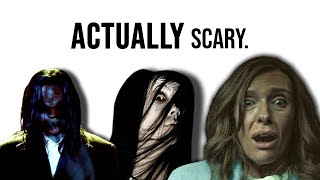
Many modern critics point to Hereditary as a peak of the genre. While it contains supernatural elements, its true horror is rooted in family trauma and the feeling of helplessness. The film explores the idea of genetic destiny—the notion that you cannot escape the sins or the mental illnesses of your ancestors. The terror comes not from the monsters, but from the disintegration of a family unit under extreme pressure.
The Surreal Nightmare: The Shining
For many, Stanley Kubrick's The Shining remains the gold standard. By trapping a family in a massive, isolated hotel, the film transforms a physical space into a manifestation of madness. The horror lies in the slow descent of Jack Torrance, as the boundary between his internal rage and the external influence of the hotel disappears. It is a masterclass in using symmetry and silence to create a feeling of profound unease.
The Dread of the Unknown: The Silence of the Lambs
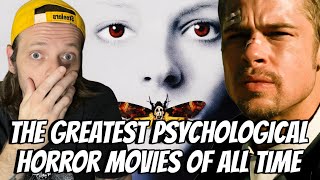
While often categorized as a crime thriller, The Silence of the Lambs is fundamentally a psychological horror film. The fear is derived from the intellectual battle between Clarice Starling and Hannibal Lecter. The movie proves that the most terrifying monsters are not those with claws, but those with a sophisticated understanding of human vulnerability and a complete lack of empathy.
How to Determine the "Scariest" Film
Determining a single "winner" is difficult because psychological fear is subjective. For some, the scariest movie is one that mirrors a real-life fear, such as the loss of a loved one or the onset of dementia. For others, it is the surrealism of a plot twist that recontextualizes everything they have seen, leaving them feeling cheated by their own intuition.
If you prefer a feeling of suffocation and hopelessness, movies like The Babadook or The Witch may be the scariest. If you prefer existential dread and identity crises, films like Black Swan or Fight Club (which borders on the genre) might resonate more.
Final Verdict
While titles vary by generation, the "scariest" psychological horror movie of all time is typically the one that manages to bridge the gap between the screen and the viewer's personal insecurities. Whether it is the ancestral curse of Hereditary