The Strait of Hormuz at the Center of Global Supply Chain Vulnerability
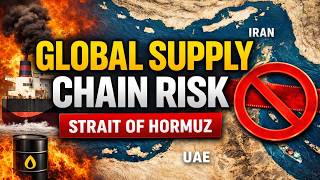
The Strait of Hormuz is one of the most critical maritime chokepoints in the world, and its recent destabilization has sent shockwaves through global supply chains. Situated between Iran and the Arabian Peninsula, this narrow waterway handles roughly a fifth of all global petroleum consumption and serves as a vital artery for commerce connecting Asia, Europe, and the Middle East.
As tensions between the United States, Israel, and Iran intensify, the strategic importance of this passage has become impossible to ignore. Analysts warn that prolonged instability in the region could disrupt shipping routes that billions of dollars of goods traverse daily, creating ripple effects far beyond the Middle East.
Why the Strait Matters So Much
To understand the gravity of the situation, it helps to look at the sheer volume of trade that flows through the strait each day. Crude oil, refined petroleum products, liquefied natural gas, and countless other commodities pass through these waters. When this route faces even the threat of disruption, energy markets react immediately, and supply chain planners begin adjusting their strategies.
The vulnerability is not abstract. Any closure or significant restriction of navigation through the strait would immediately tighten global energy supplies. Nations heavily dependent on Middle Eastern energy imports would face urgent shortages, while alternative supply routes would struggle to compensate for the sudden gap.
Rising Prices and Growing Shortages
The consequences of unrest around the strait are already visible across multiple sectors. From jet fuel to fertilizer, the conflict involving Iran is contributing to price increases and product shortages that extend well beyond the region. Airlines grappling with elevated fuel costs may face reduced capacity or higher ticket prices. Agricultural producers relying on affordable fertilizer are feeling the strain, which could eventually translate into higher food costs for consumers worldwide.
Medical supplies represent another area of concern. Essential pharmaceuticals and healthcare materials routed through Middle Eastern logistics hubs have faced delays and cost escalation as insurers and shippers reassess risk profiles. The compounding effect of these disruptions illustrates how interconnected modern supply chains truly are.
Economic Expertise Highlights the Scope of Risk
According to specialists in transport, logistics, and automotive sectors, the current environment demands careful monitoring. Economists at institutions like ING Research have emphasized that the intersection of geopolitical tension and infrastructural dependency creates a uniquely fragile scenario. Unlike conflicts in regions where alternative trade routes readily exist, the Strait of Hormuz has limited substitutes when commercial shipping cannot safely navigate its waters.
This means that even the perception of risk can be enough to alter shipping decisions. Carrier companies may reroute vessels, increase insurance premiums, or temporarily suspend transits. Each of these responses adds cost and time to the supply chain, and those expenses ultimately get passed downstream to manufacturers, distributors, and end consumers.
What Could Happen If the Strait Faces Closure
The most severe scenario involves an actual shutdown of navigation through the strait. While such an event would likely prompt rapid diplomatic and military efforts to restore passage, the initial disruption would be sharp and costly. Oil prices could spike dramatically, supply chains for energy-intensive industries might seize, and global inflationary pressures would intensify.
Even a partial disruption carries significant weight. Restricted operating hours, heightened security measures, and insurance complications can reduce the effective throughput of one of the world's busiest energy corridors without fully closing it. This kind of ongoing uncertainty is itself damaging to supply chain planning, forcing businesses to hold larger inventories, secure more expensive contracts, and accept longer lead times.
Looking Ahead
The long-term implications of continued instability in the Strait of Hormuz region remain a source of serious concern for economists and supply chain professionals alike. Companies are increasingly evaluating whether their reliance on Middle Eastern trade routes represents an unacceptable level of risk, and some are exploring diversification strategies that could reshape global logistics patterns over time.
For now, the situation underscores a fundamental reality of modern commerce: the stability of a relatively small stretch of water can influence the price of nearly everything people buy. As geopolitical dynamics continue to evolve, keeping a close watch on developments around the Strait of Hormuz will remain essential for anyone affected by global supply chain performance.