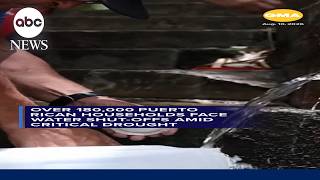
A Growing Crisis: Puerto Rico's Water Shortage
Puerto Rico is facing one of the most pressing challenges in its modern history—a severe and escalating water shortage that threatens the daily lives of millions of residents across the island. The crisis is not merely a matter of inconvenient dry taps; it is a fundamental threat to public health, economic stability, and social cohesion on a territory already strained by years of economic hardship and natural disasters.
How Did We Get Here?
The roots of Puerto Rico's water crisis are multifaceted and deeply interconnected. At the most visible level, prolonged drought conditions have dramatically reduced the amount of rainfall reaching the island's reservoirs and aquifers. Rainfall patterns across the Caribbean have become increasingly unpredictable, with extended dry spells becoming the norm rather than the exception. These drought conditions have left reservoirs at critically low levels, forcing authorities to impose strict water rationing measures across numerous municipalities.
But drought alone does not tell the full story. Puerto Rico's water infrastructure is among the oldest and most deteriorated in the United States. Decades of underinvestment, combined with the brutal effects of hurricanes Maria and Fiona, have left a system that leaks an estimated forty percent of its treated water before it ever reaches a customer's tap. Aging pipes, failing treatment facilities, and inadequate storage capacity mean that even when water is available, the logistics of delivering it reliably remain a daunting challenge.
Federal Recognition and Emergency Response
In response to the deepening emergency, the U.S. government has formally declared a drought disaster affecting more than two dozen cities and towns across the island. This designation opens the door to federal emergency resources, including financial assistance, National Guard deployments for water distribution, and access to specialized equipment for emergency water production. The declaration represents a significant acknowledgment that the crisis has crossed a threshold beyond which local governments cannot manage alone.
Local officials have been sounding the alarm for months. In late July 2025, the governor of Puerto Rico announced emergency water rationing protocols that restrict household water usage to just a few hours per day in the hardest-hit areas. Many communities receive water only once or twice a week, forcing residents to store every available drop in buckets, barrels, and any container they can find. Restaurants, hotels, and small businesses that depend on consistent water supply have been forced to reduce operations or close entirely.
The Human Cost
Behind the statistics and emergency declarations are the lived experiences of Puerto Rican families who now wake each morning uncertain whether their taps will run. Women, who traditionally bear disproportionate responsibility for household water management, spend hours each day lining up at distribution points or hauling containers from whatever source is available. Schools have been forced to limit bathroom breaks and cancel outdoor activities. Elderly residents and those with chronic health conditions face particular dangers when clean water becomes scarce.
The psychological toll of the crisis should not be underestimated. For a population that has already endured earthquake sequences, volcanic eruptions elsewhere in the Caribbean affecting migration patterns, and the lingering effects of Hurricane Maria in 2017, each new water emergency feels like another weight on an already burdened community. Trust in institutional responses erodes when promises of relief arrive too slowly or too sparsely to make a meaningful difference.
Economic Ripple Effects
The water shortage is not confined to domestic life. Agriculture, a sector that has struggled to recover from years of neglect, faces existential threats when irrigation supplies dry up. Tourism—the island's economic lifeline—suffers when visitors encounter showers that sputter and restaurants that serve only bottled water. Manufacturing facilities dependent on consistent water pressure have halted production lines, leading