What Is a Private Key?
A private key is a secret piece of data that enables a user to prove ownership of a digital asset or to decrypt information that was encrypted with the matching public key. In asymmetric cryptography, the private key is paired with a public key; the public key can be shared openly, while the private key must remain confidential.
How Private Keys Fit into Public‑Key Cryptography
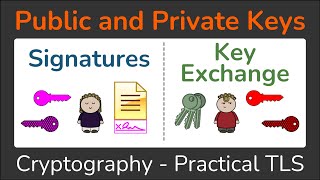
Public‑key cryptography, also known as asymmetric encryption, relies on two mathematically linked keys. The public key encrypts data or verifies a digital signature, and the private key decrypts that data or creates a signature. This separation allows secure communication without the need to exchange a secret key in advance.
- Encryption flow: Sender encrypts a message with the recipient’s public key; only the recipient’s private key can decrypt it.
- Signature flow: Sender signs a message with their private key; anyone can verify the signature using the sender’s public key.
Generating and Storing Private Keys
Private keys are typically generated by cryptographic algorithms such as RSA, ECC (Elliptic Curve Cryptography), or Ed25519. The generation process uses a source of randomness to ensure that each key is unique and unpredictable.
Secure storage is critical because anyone who obtains a private key can impersonate the owner. Common storage methods include:
- Hardware security modules (HSMs) or dedicated hardware wallets.
- Encrypted files protected by strong passphrases.
- Operating‑system key stores that isolate keys from user applications.
When a private key is stored in plain text on a device, it is vulnerable to malware, physical theft, or accidental exposure.
Private Keys in Cryptocurrency Wallets
Cryptocurrency wallets manage a collection of private keys that control access to digital coins. Each private key corresponds to a public address on the blockchain. If a user loses the private key, they lose the ability to spend the associated funds.
Modern wallets often use a seed phrase—a human‑readable list of 12 to 24 words—to derive a hierarchy of private keys. The seed phrase itself is a compact representation of the master private key, and protecting it is as important as protecting any individual private key.
- Never share your seed phrase or private key with anyone.
- Store the seed phrase offline, preferably on paper or a metal backup.
- Use multi‑signature wallets when higher security is required.
Using Private Keys for Secure Shell (SSH) Access
SSH (Secure Shell) employs private keys to authenticate users without transmitting passwords over the network. Dr. Rob Edwards from San Diego State





![Can Someone Guess My Crypto Private Key? [From Sand, to Molecules, to the Observable Universe]](https://i.ytimg.com/vi/2eZ5DP2P5As/mqdefault.jpg)