Understanding Mortgage Payments: Principal vs Interest
When you start looking at mortgage options, you will encounter terms that can seem confusing at first. Two of the most important components of any mortgage payment are principal and interest. While these terms are often mentioned together, they represent different parts of what you pay each month. Understanding how they work is crucial for making informed decisions about your home loan.
What Is Principal in a Mortgage?
The principal is the actual amount you borrow from the lender to purchase your home. When you make a down payment, you are essentially reducing the principal amount that needs to be financed. For example, if a home costs 300,000 and you put down 20 percent, your principal would be 240,000. This principal amount is what builds equity in your home over time.
Each time you make a principal payment, you are reducing the balance that the lender is holding. This reduction in balance means you will owe less interest over the life of the loan. Many homeowners focus on making additional principal payments to pay off their mortgage faster and save money on interest.
What Is Interest in a Mortgage?
Interest is the cost of borrowing money from the lender. It is calculated as a percentage of your outstanding principal balance. When you make your monthly mortgage payment, a portion goes toward interest and a portion goes toward principal. The interest portion represents the lender's fee for lending you the money.
Interest rates can be fixed or adjustable. With a fixed-rate mortgage, your interest rate stays the same throughout the entire loan term. With an adjustable-rate mortgage, your interest rate can change after an initial fixed period. The interest rate you qualify for depends on factors like your credit score, the size of your down payment, and current market conditions.
How Mortgage Payments Are Calculated
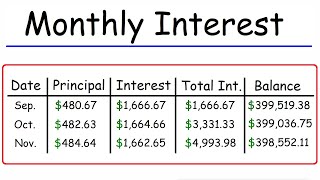
A standard mortgage payment is calculated using a formula that considers your loan amount, interest rate, and loan term. In the early years of your loan, the interest portion is typically larger than the principal portion. This is because interest is calculated on the full loan amount at the beginning.
As you continue making payments and your principal balance decreases, the interest portion of your payment gradually becomes smaller while the principal portion becomes larger. This is known as amortization. You can see this progression clearly by examining an amortization schedule.
Using a Mortgage Calculator Effectively
A mortgage calculator can help you understand how different factors affect your payments. By inputting various scenarios, you can see how changes in interest rates or loan terms impact the distribution between principal and interest.
Most online mortgage calculators allow you to adjust variables like down payment amount, loan term, and interest rate. They will show you the monthly payment amount and break down how much goes to principal versus interest. This can be particularly useful when comparing different loan options.
Some calculators also show the total interest paid over the life of the loan. This can help you understand the long-term cost of different mortgage options. Remember that a lower monthly payment doesn't always mean a better deal if the total interest cost is higher.
Strategies for Managing Principal and Interest
Understanding the principal versus interest breakdown can help you develop strategies to save money on your mortgage. Making extra principal payments can significantly reduce the total interest you pay over the life of your loan.
If you have extra funds available, consider making additional principal payments rather than paying down other debts with higher interest rates. This can help you pay off your mortgage faster and save thousands in interest.
Another strategy is to make your payments more frequently. Instead of paying monthly, consider paying bi-weekly. This can result in one extra payment per year, which goes directly toward reducing your principal balance.
Long-Term Implications of Principal vs Interest
Over time, the balance between principal and interest in your mortgage payment shifts significantly. In the first few years, you might pay 70 to 80 percent of your payment toward interest.