James Bond Movies Chronological Order List
The James Bond film franchise stands as one of the most enduring legacies in cinematic history. Spanning over six decades, the series has introduced audiences to the world's most famous secret agent across countless missions, iconic villains, and unforgettable moments. For fans looking to watch the entire saga in the proper sequence, understanding the chronological order of every James Bond movie is essential. This guide walks you through each film from beginning to end, covering all eras and all actors who have worn the tuxedo.
The Sean Connery Era
Sean Connery first brought James Bond to life in 1962 with Dr. No, a lean and atmospheric thriller that established the template for everything that followed. He returned for From Russia with Love, widely regarded by many fans as one of the finest entries in the entire franchise. Goldfinger remains a cultural touchstone, featuring some of the most recognizable scenes in Bond history. Thunderball brought underwater sequences and the SPECTRE organization to the forefront, while You Only Live Twice shifted the action to Japan with a visually striking climax. Connery's final original Eon production was Diamonds Are Forever, though he would later return for the unofficial entry Never Say Never Again before passing the torch to George Lazenby.
The George Lazenby Entry
On Her Majesty's Secret Service saw George Lazenby step into the role for a single film. Set in the Swiss Alps with a more emotional storyline than its predecessors, it featured Bond actually falling in love and marrying Tracy. Though Lazenby only appeared in one official Bond film, this entry holds a devoted following and serves as a compelling bridge between the Connery and Moore generations.
The Roger Moore Years
Roger Moore brought a lighter, more playful tone to the character during his seven-film run. Live and Let Die introduced the world to Solitaire and Mr. Big, setting the stage for a distinctly different era. The Man with the Golden Gun showcased an elegant adversary in Scaramanga, while The Spy Who Loved Me featured the memorable submarine Lotus. Moonraker pushed the franchise into space, a decision that remains controversial among purists. For Your Eyes Only toned things back down, focusing on a more grounded espionage narrative. Octopussy and A View to a Kill rounded out Moore's tenure, with the latter pitting Bond against the cold and calculating Max Zorin, played by Christopher Walken.
The Timothy Dalton and Pierce Brosnan Films
Timothy Dalton brought a darker and more serious Bond back to the screen with The Living Daylights and Licence to Kill. His portrayal leaned heavily into the gritty tone of the Ian Fleming novels and appealed to fans who wanted a Bond closer to the source material. Pierce Brosnan then took over with GoldenEye, which successfully rebooted the franchise for a new generation after a six-year hiatus. Tomorrow Never Dies continued the modernized direction with a media mogul villain, while The World Is Not Enough introduced the seductive but dangerous Elektra King. Die Another Day concluded Brosnan's run with an ice palace and a genetically enhanced antagonist.
The Daniel Craig Revolution
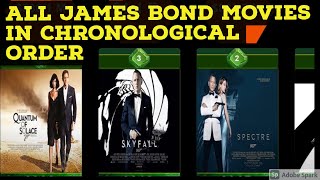
Daniel Craig's Bond marked the most dramatic reinvention in the franchise's history. Casino Royale reimagined the origin story, showing how Bond earned his 00 status and the devastating personal cost of his first mission. Quantum of Solace directly continued the emotional fallout, while Skyfall revisited Bond's psyche with a deeply personal confrontation involving his past. Spectre wove together threads from previous films into an expansive conspiracy, and No Time to Die delivered an emotional finale that closed Craig's arc and ended his era on a profoundly moving note.