Understanding India's Energy Security Challenges
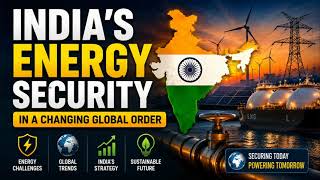
India stands as one of the world's largest energy consumers, and its dependence on imported fuels has created a complex web of vulnerabilities that threaten long-term economic stability. With domestic production falling far short of rising demand, New Delhi finds itself navigating an increasingly precarious energy landscape shaped by geopolitical tensions, supply chain fragility, and the global transition toward cleaner power sources.
The Import Dependency Dilemma
Oil imports alone account for roughly eighty-five percent of India's crude requirements. The country ranks as the third-largest consumer of petroleum products globally, and this demand continues to climb at an annual rate of four to five percent. Natural gas imports, primarily in the form of liquefied natural gas, have also expanded significantly over the past decade. Coal remains a cornerstone of India's energy mix, with Indonesia, Australia, and South Africa serving as critical suppliers.
This heavy reliance on foreign sources means that any disruption in global supply chains can have immediate and severe consequences for India's economy. Price volatility in international markets translates directly into higher inflation, larger trade deficits, and pressure on the rupee. The government has recognized these risks and has pursued strategies such as strategic petroleum reserves and diversification of supply routes, but the fundamental imbalance remains largely unaddressed.
Geopolitical Flashpoints
A significant portion of India's oil shipments transit through the Strait of Hormuz and the Arabian Sea, regions where military tensions, piracy, and diplomatic disputes are persistent concerns. Any conflict in the Middle East or broader instability in West Asian producing nations could severely constrain supply. India has responded by strengthening naval partnerships and securing energy agreements with a wider range of suppliers, including nations in Africa and Latin America, yet these measures cannot fully eliminate exposure.
The recent development in the United States, where the House cleared a Russia sanctions bill that could open a new pathway for the White House to impose tariffs, adds another layer of complexity. India's ongoing energy purchases from Russia, which have surged since the Ukraine conflict began, now sit within the crosshairs of potential secondary sanctions. American legislation designed to pressure Moscow could indirectly penalize countries that continue purchasing Russian crude, and India could find itself caught between maintaining affordable energy supplies and preserving its critical economic relationship with Washington.
The Renewable Transition Paradox
India has set ambitious targets for renewable energy deployment, aiming for five hundred gigawatts of non-fossil fuel capacity by the end of the decade. Solar and wind installations are growing rapidly, and the government has introduced incentives for green hydrogen development and electric vehicle adoption. These efforts are commendable and necessary, but they do not come without challenges.
The intermittent nature of renewable sources requires substantial investment in battery storage, grid modernization, and backup capacity. Until these supporting infrastructures reach maturity, fossil fuels will remain indispensable. Furthermore, many renewable technologies depend on critical minerals such as lithium, cobalt, and rare earth elements, which are concentrated in a handful of countries. Securing access to these materials presents a new dimension of energy security risk that India must begin to address.
Diversification and Strategic Reserves
policymakers in New Delhi understand that overreliance on any single supplier or route is a dangerous strategy. Efforts to diversify are underway across multiple fronts. Domestic exploration programs seek to unlock previously untapped reserves, though geological and environmental constraints limit how much homegrown production can realistically contribute. Investments in coal gasification and imported pipeline gas from neighbors like Myanmar represent additional, albeit modest, avenues.
Strategic petroleum reserves have been expanded to provide a buffer against short-term disruptions, and discussions about creating regional energy alliances with countries such as Japan and South Korea reflect recognition that shared preparedness is more effective than isolated action. nevertheless, the