Strategic Chokepoint at Risk
The Strait of Hormuz represents one of the most critical maritime passages in the world, serving as a vital artery for global energy trade. Approximately one-fifth of worldwide petroleum consumption flows through this narrow waterway, connecting the Persian Gulf to the Gulf of Oman and the broader Arabian Sea. Any disruption to shipping through this strait sends immediate shockwaves through international markets and geopolitical calculations.
Geographic Vulnerability
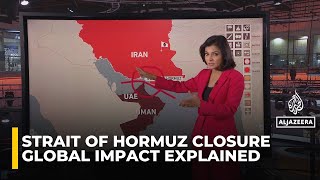
The strait measures roughly 33 kilometers at its narrowest point, making it an inherently constrained passage. Tankers and commercial vessels must navigate through international waters flanked by Iranian territory on the north shore and the United Arab Emirates and Oman on the south. This geographic reality gives Iran disproportionate leverage over a chokepoint that countries across Europe, Asia, and beyond depend upon for their energy security.
The implications of closing the strait extend far beyond simple shipping delays. In a scenario where Iran moves to block or severely restrict passage, the global economy would face immediate and compounding pressures that analysts warn could reshape energy markets for years.
Energy Market Turbulence
The most direct consequence of a closure would be a dramatic spike in oil prices. The International Energy Agency has previously estimated that shutting down Hormuz could remove millions of barrels of crude from daily supply almost overnight. With global oil markets already operating on thin margins, even a short disruption could push prices well above current levels.
Angelina Valavina of Fitch Ratings EMEA has noted that the natural resources and commodities sector would face unprecedented stress in such a scenario. LNG shipments from Qatar, one of the world's largest exporters, would be among the first casualties, given that the vast majority of Qatari gas exports transit through Hormuz. European and Asian buyers who rely on these supplies would scramble for alternative sources, further driving up costs.
Cascading Economic Effects
Rising energy costs would ripple through supply chains globally. Transportation expenses would climb, food prices would increase, and manufacturing costs would rise as businesses confront higher fuel and input costs. Central banks that have been cautious about inflation would find themselves in a difficult position, potentially being forced to maintain or raise interest rates precisely when economic growth is stalling.
Emerging markets that import the bulk of their energy would bear a disproportionate burden. Countries in South Asia and parts of Africa that already struggle with energy affordability could face severe economic strain, potentially triggering social and political instability in some regions.
Geopolitical Dimensions
The strategic importance of Hormuz is inseparable from the broader tensions between Iran and the United States, as well as regional actors. As fighting in the Middle East escalates, Iranian military leaders, including officials within the Revolutionary Guards Corps, have signaled that they view control over the strait as a potential lever in any broader conflict.
Diplomatic efforts to de-escalate have so far fallen short. Ceasefire discussions held in Pakistan between the United States and Iran ended without reaching an agreement, leaving the door open for further confrontation. Former President Donald Trump has made clear that he is prepared to take decisive action if American interests are threatened, a stance that could further inflame tensions in the region.
Military Response Scenarios
A closure of the strait would likely prompt a significant military response from the United States and its allies. The U.S. Fifth Fleet, headquartered in Bahrain, maintains a substantial presence in the region precisely to ensure freedom of navigation. Clearing mined waters and restoring safe passage could require weeks or months of sustained naval operations.
Any military confrontation in the vicinity of Hormuz would carry enormous risk of spreading into a wider