Analysis Of Tupac Shakur Political Lyrics
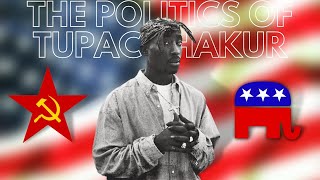
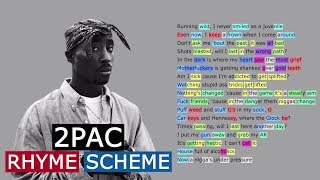
Tupac Amaru Shakur remains one of the most complex figures in music history, not only for his commercial success but for the depth of his sociopolitical commentary. While often remembered for his "Thug Life" persona, a closer analysis of his lyrics reveals a sophisticated understanding of systemic oppression, racial inequality, and the struggle for human rights. His work served as a bridge between the raw energy of gangsta rap and the intellectual rigor of revolutionary politics.
The Influence of Revolutionary Roots
To understand the political weight of Tupac's lyrics, one must look at his heritage. Born to parents active in the Black Panther Party, Shakur was immersed in ideologies of self-determination and community empowerment from a young age. This upbringing is evident in his early work, where he frequently referenced the need for structural change rather than mere superficial improvements.
His lyrics often mirrored the rhetoric of historical figures like Malcolm X and Kwame Ture. Instead of focusing solely on individual success, he spoke about the collective experience of the marginalized. He viewed the rapper's role not just as an entertainer, but as a journalist for the streets, documenting the failures of the American dream for those living in neglected urban centers.
Themes of Systemic Oppression and Poverty
A recurring theme in Tupac's political analysis is the cyclical nature of poverty and the role of the state in maintaining that cycle. He frequently critiqued the judicial system and police brutality, arguing that the law was often weaponized against the poor and people of color.
- Institutional Racism: His lyrics highlighted how redlining and lack of educational resources trapped generations in a state of economic instability.
- The Prison Industrial Complex: He spoke candidly about the disproportionate incarceration rates of Black men, viewing prisons as tools of social control rather than rehabilitation.
- Urban Neglect: Many of his songs painted a vivid picture of "the ghetto," not to glamorize it, but to expose the desperation that leads to crime.
By framing crime as a symptom of systemic failure rather than a personal moral failing, Shakur challenged his listeners to look beyond the surface of street violence and question the political structures that fostered it.
The Duality of the "Thug" and the Poet
One of the most intriguing aspects of an analysis of Tupac's political lyrics is the tension between his aggressive delivery and his empathetic message. He coined the term "Thug Life" not as a promotion of criminality, but as an acronym for The Hate U Give Little Infants Fucks Everyone.
This phrase serves as a sociological thesis: the neglect and hatred projected onto children by society eventually manifest as violence that affects the entire community. Through this lens, the "thug" is a product of a broken system. By adopting this persona, Tupac was able to speak directly to the youth who felt abandoned by the government, offering them a sense of identity while simultaneously urging them to seek a higher consciousness.
Empowerment and Social Responsibility
Beyond the critique of oppression, Tupac’s lyrics often pivoted toward hope and empowerment. He emphasized the importance of education, self-reliance, and community solidarity. He urged his listeners to take ownership of their lives despite the obstacles placed in their paths.
His political lyrics were rarely one-dimensional. He often grappled with the contradiction of wanting peace while living in a state of war. This internal conflict added a layer of authenticity to his work, making his calls for social justice feel earned rather than performative. He didn't speak from a position of detached intellectualism, but from the perspective of someone who had lived the contradictions he described.
Lasting Impact on Political Discourse in Music
The legacy of Tupac's political writing continues to influence modern artists. By integrating complex social critiques into mainstream hip-hop, he paved the way for future generations to use their platforms for activism. His ability to synthesize anger with empathy and poetry with politics ensured that his music remained relevant long after his passing.
Ultimately, an analysis