Understanding Actuators: The Heart of Industrial Automation
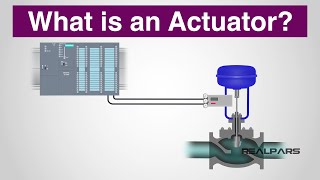
In modern manufacturing and robotics, an actuator is the device that converts energy into motion, enabling machines to perform tasks ranging from simple valve opening to complex multi‑axis positioning. Whether driven by electricity, hydraulics, or pneumatics, actuators are the bridge between control systems and physical movement, making them indispensable in today’s automated factories.
Types of Actuators and Their Core Principles
Electric Actuators
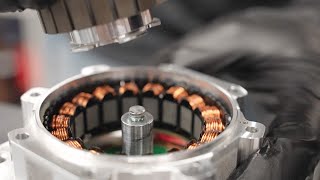
Electric actuators use electromagnetic fields to produce linear or rotary motion. Common variants include:
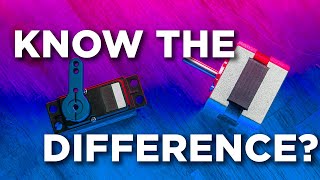
- Servo motors – provide precise angular control with feedback loops.
- Stepper motors – move in discrete steps, ideal for open‑loop positioning.
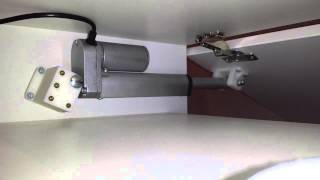
- Linear electric actuators – convert rotary motion into linear displacement, often seen in CNC machines.
Hydraulic Actuators
Hydraulic actuators rely on pressurized fluid to generate force. They excel in high‑load applications such as heavy‑duty presses, excavation equipment, and aerospace control surfaces. The fluid’s incompressibility allows for smooth, powerful motion, but it requires careful sealing and maintenance.
Pneumatic Actuators
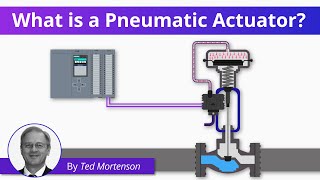
Pneumatic systems use compressed air to move pistons or rotary elements. They are favored for fast, repeatable actions in packaging lines, material handling, and pneumatic cylinders. While they offer lower force than hydraulic units, their simplicity and cleanliness make them a popular choice for many industries.
Key Factors When Selecting an Actuator
Choosing the right actuator depends on several parameters that directly affect performance and reliability:
- Load requirements – Determine the force or torque needed to move the load.
- Speed and response time – Faster cycles may demand electric or pneumatic solutions.
- Precision – Servo systems provide high accuracy, while simple on/off devices may suffice for less critical tasks.
- Environment – Consider temperature, contamination, and space constraints.
- Control integration – Ensure compatibility with PLCs, motion controllers, or IoT platforms.
Integrating Actuators into an Automation System
Effective integration begins with a clear understanding of the control architecture. A typical workflow involves:
- Programming a controller (PLC or industrial PC) to issue commands.
- Using feedback devices such as encoders or limit switches to verify position.
- Implementing safety interlocks and emergency stop circuits.
- Testing the system in a simulated environment before full deployment.
For those new to industrial automation, a comprehensive learning resource is available at realpars.com, which offers tutorials on actuator selection, wiring, and programming.
Designing Custom Actuator Solutions
Engineers often need to tailor actuators to specific applications. For example, designing a servo cylinder—a linear actuator with integrated feedback—requires careful selection of motor size, gear ratio, and sensor placement. Advanced CAD tools can model the mechanical structure, while simulation software predicts performance under load.